
Foot Health After 60
5 Shoes Quietly Wrecking Women's Feet After 60 (And What to Wear Instead)
AdvertorialBy Margaret Ellis │ November 12, 2026
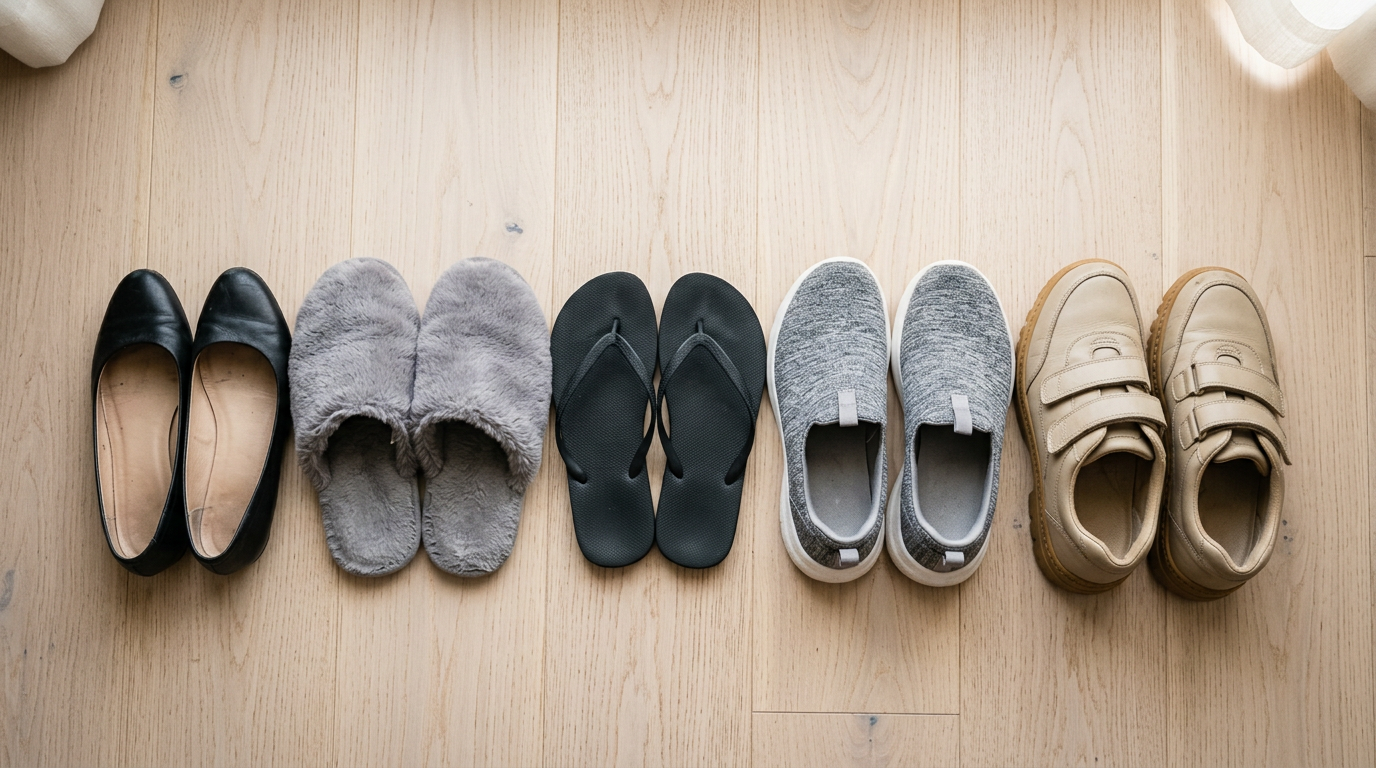
Your feet at 63 are not the feet you had at 43. The cushioning pad under your heel gets thinner, your feet get wider and a little longer, and your arches flatten a bit with every decade.
Your shoes didn't change with them. That's why a pair you've worn happily for years can suddenly have you looking for somewhere to sit down by lunchtime.
Here are the five shoes we see most often in women's closets, what each one is doing to your feet, and the simple swap.
Quick check: which of these are you still wearing?
Most women check off at least two. Here's why each one matters.
Culprit No. 1
The Pointed Ballet Flat
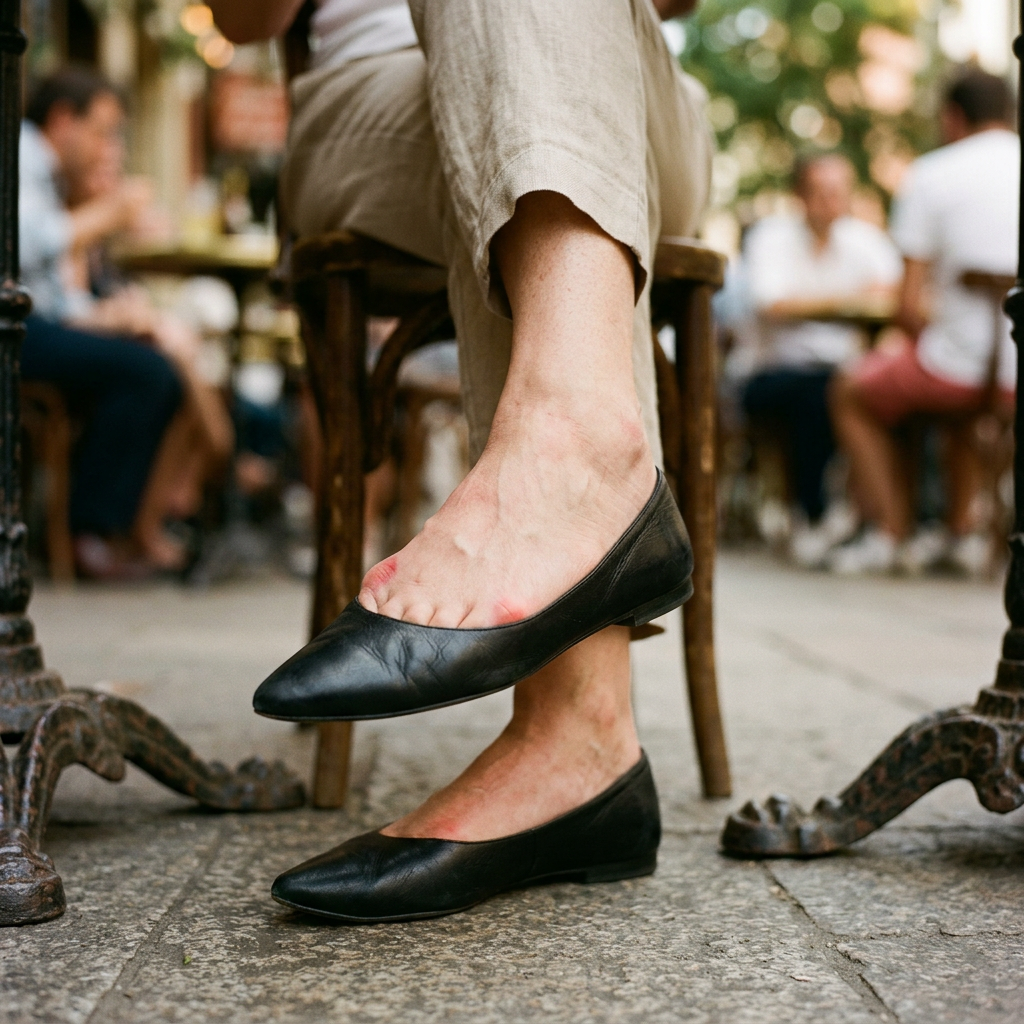
It's the shoe most of us grew up in, and the one that has done the most damage.
Your toes spread wider than the front of a pointed flat. Something has to give, and it's your toes, squeezed together hour after hour, year after year.
That squeeze is where bunions, corns and hammertoes come from. After 60 the joint is already tender, and stiff leather presses on the bump all day until it's red and throbbing by evening.
Look for instead: a wide, rounded toe where your toes can lie flat side by side, and a soft upper that gives around a bunion instead of pressing on it.
Culprit No. 2
The Backless Slipper (or Mule)
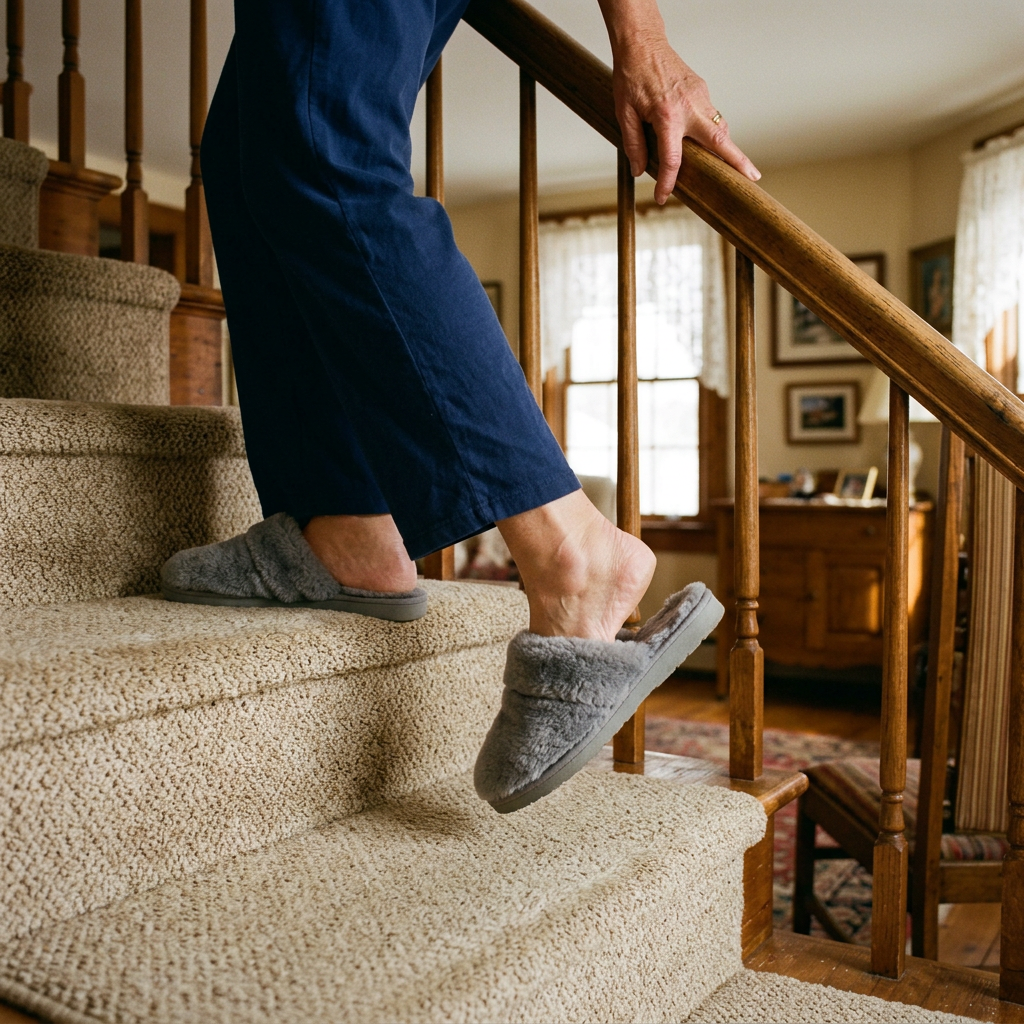
Comfortable? Yes. Steady? Not really.
With nothing behind your heel, the only thing keeping a backless slipper on is your toes, curled and gripping. Your heel lifts out on every step, and on the stairs that's exactly when a slipper catches.
More than one in four adults 65 and over has a fall every year, and women fall more often than men. Those are CDC numbers, and nobody honest will tell you a shoe fixes that.
But a shoe that stays on your foot is one less thing to trip over, and backless slippers get worn most on the stairs, in the kitchen and on the way to the bathroom at night.
Look for instead: something that holds the shoe to your foot, like a strap across the top, so your toes can relax and your heel stays put on the stairs.
Culprit No. 3
Flip-Flops
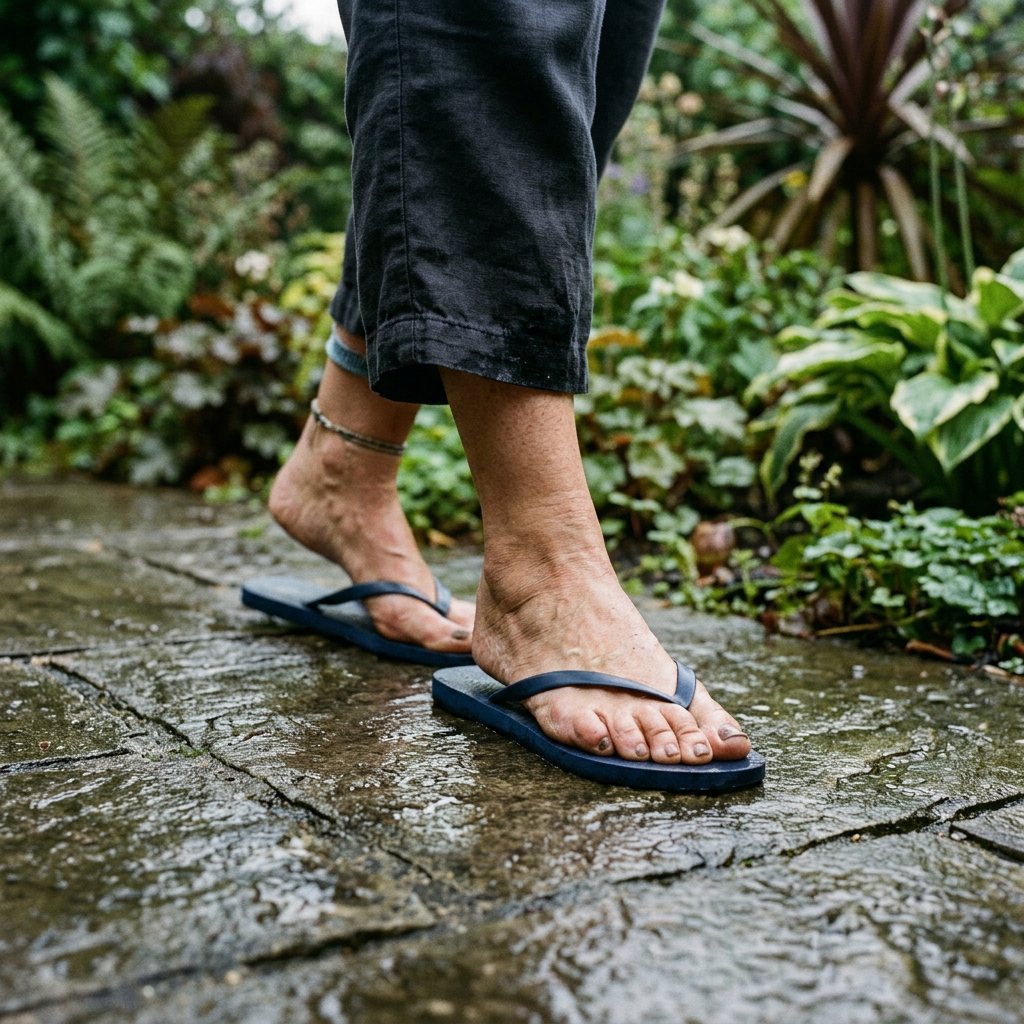
Fine for the beach. Hard work for everything else.
A strip of foam and a post between your toes. To keep them on, your toes claw down with every step, which is why your arches and calves ache after a day at the mall in flip-flops.
There's barely any cushioning either. With a thinner heel pad, every step on a hard sidewalk goes straight up into your heel.
And on wet tiles by the pool, in the bathroom or on the walkway, a thin, flat sole has very little grip.
Look for instead: real cushioning under your heel and a flexible grip sole that stays steady when the floor is wet.
Culprit No. 4
The Squishy Slip-On Sneakers Everyone's Wearing
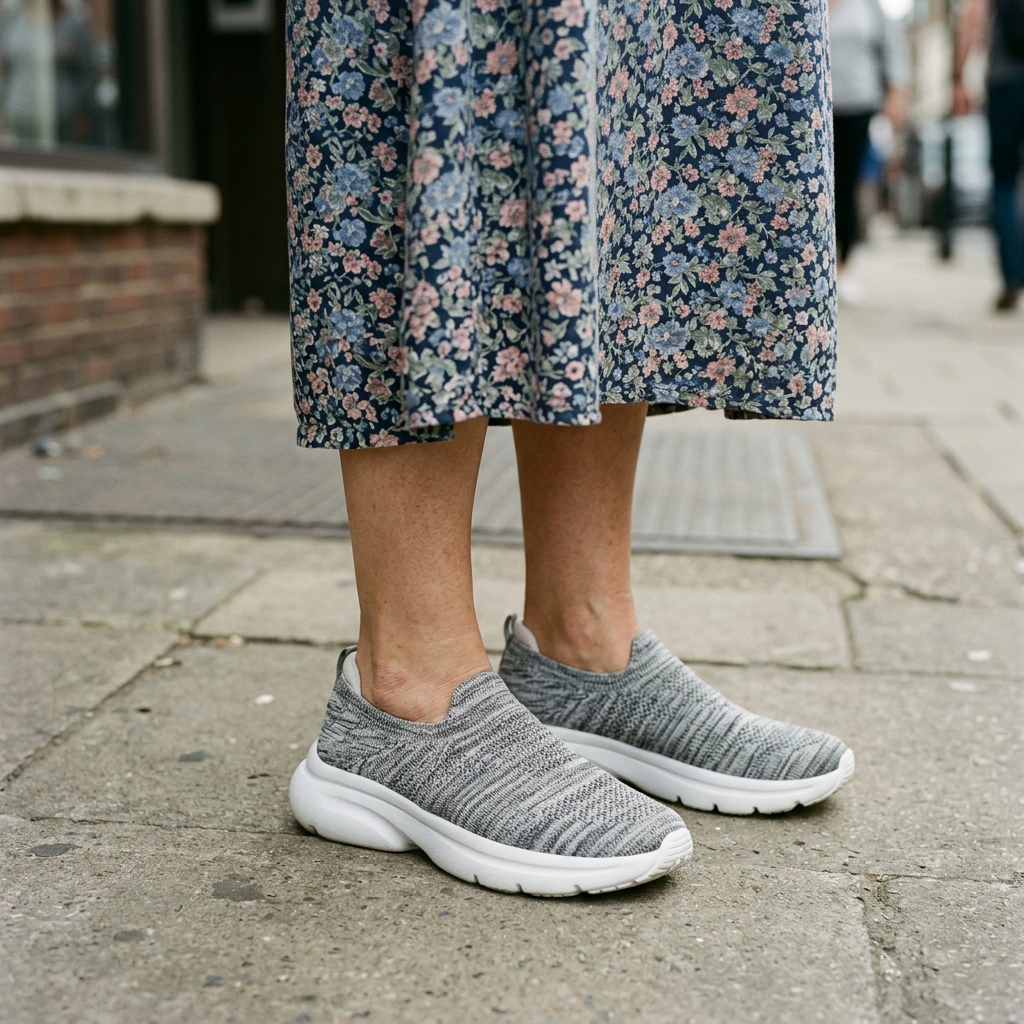
This is the one that surprises women, because it was sold to you as the comfortable choice.
Easy to slip on, no laces, and a thick pillow of soft foam underneath. It feels wonderful in the shop. But foam that soft gives way under you, and on a rounded sole your ankle has to keep correcting with every step.
Then there's the fit. A knit slip-on has nothing holding it on, so once the opening stretches, your foot slides forward inside it and you're back to gripping with your toes, exactly like the backless slipper.
And it's still a sports shoe. It doesn't go with a dress, so on the days you want to look nice, you're straight back into Culprit No. 1.
Look for instead: cushioning that's soft but still steady underfoot, a sole that bends with your foot instead of rocking under it, and a strap that actually holds the shoe on.
Culprit No. 5
The Bulky "Orthopedic" Shoe
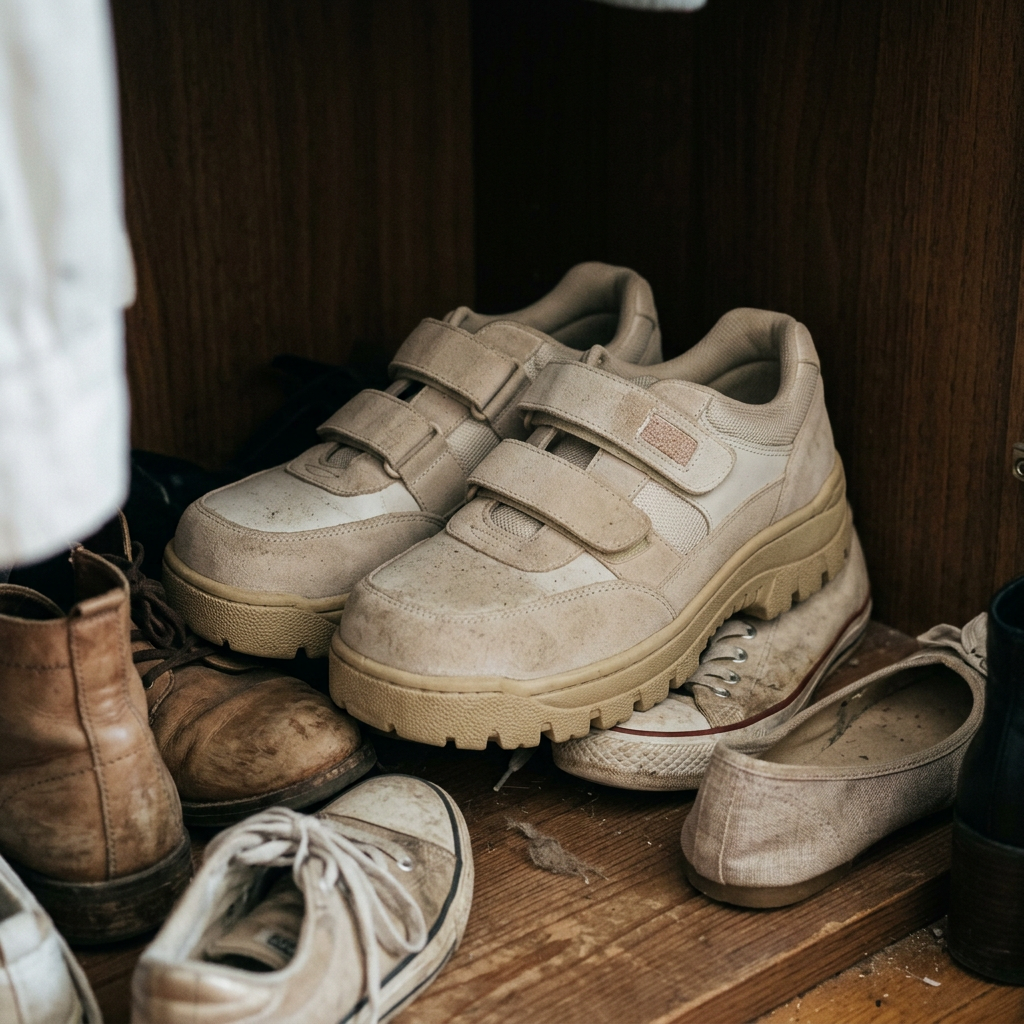
Your feet aren't the problem here. The shoe is.
Boxy, heavy and built like a brick, with two wide straps across the top. Every step means lifting all that weight, and by the afternoon your legs are tired before your feet are.
The sole barely bends, either. When a shoe won't flex, your foot can't roll through the step, so you start to shuffle, and a shuffling step catches on curbs and door frames.
But here's the real trouble: it looks like a medical appliance. Most women quietly hate how it looks, so it sits at the back of the closet while the pointed flats come out again. The best shoe in the world does nothing for you if you won't wear it.
Look for instead: something light and flexible with a neat buckle, that looks like a shoe you chose rather than one you were prescribed.
So What Should You Wear Instead?
Put the five swaps together and you get a short checklist. Ask a podiatrist what to look for in a flat after 60 and you'll hear most of it.
- 1A roomy, rounded toe, so your toes lie flat instead of stacked.
- 2A soft upper that gives around bunions and swelling.
- 3Something holding it on, so you're not gripping with your toes.
- 4Cushioning that stays steady, on a grip sole that bends with your foot.
- 5Light, and nice enough to wear every day, not just at home.
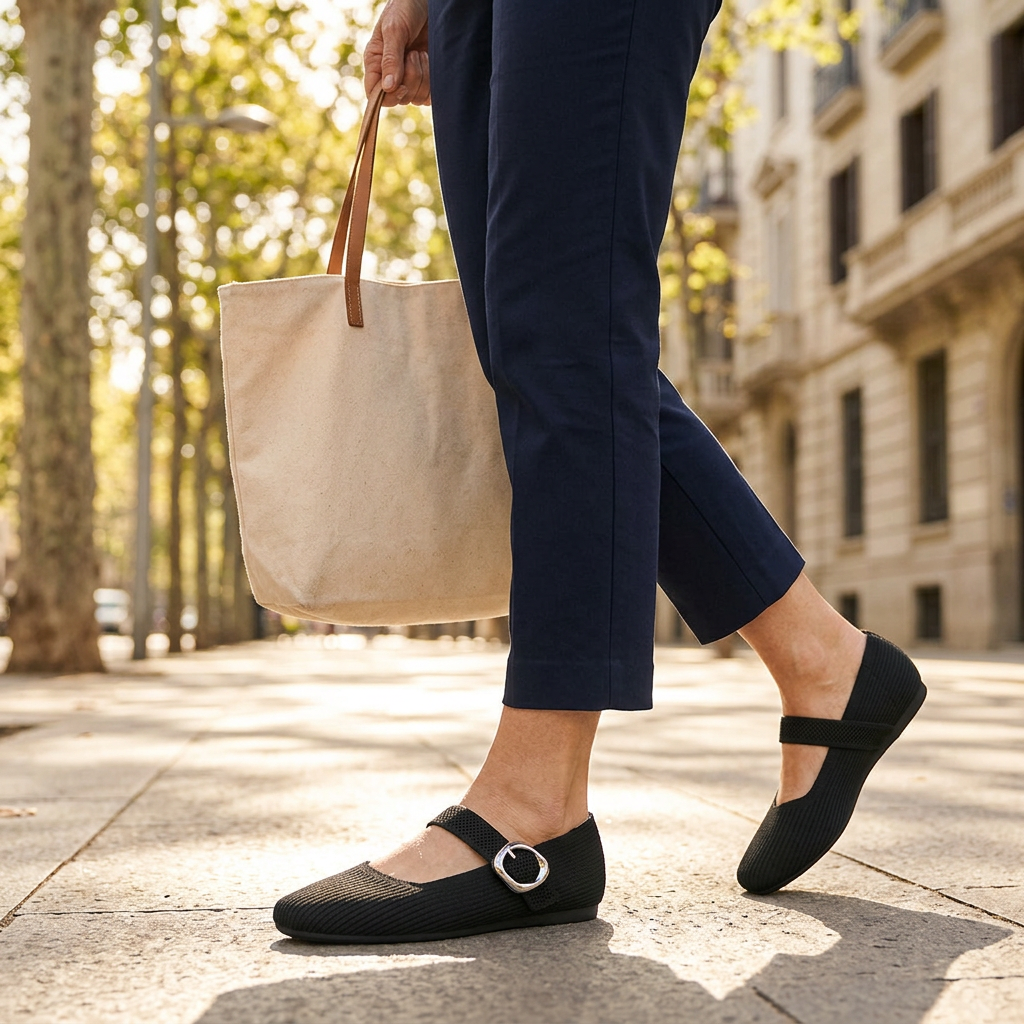
The One Flat We Found That Checks All Five Boxes
Most comfort shoes check off two or three boxes and look like comfort shoes. The OrthoFit Mary Jane Comfort Flats check off all five and look like a classic Mary Jane with a polished silver buckle.
The soft stretch knit gives around a bunion. The rounded toe lets your toes spread. The strap holds your heel in, the grip sole stays steady on wet floors, and the whole shoe weighs next to nothing.
Nobody knows they're comfort shoes unless you tell them.
- Replaces the pointed flat: wide, rounded toe
- Replaces the slipper: a strap that keeps it on
- Replaces the flip-flops: cushioned, grippy sole
- Replaces the slip-on sneakers: steady, and smart enough for a dress
- Replaces the bulky orthopedic shoe: light knit and a neat silver buckle, not a medical look
How to Get Yours (50% OFF Plus FREE Shipping)
 -50%
-
1
Pick your color and sizeIn stock in Classic Black, Soft Beige, Midnight Navy, Royal Purple, Rich Burgundy, and Scarlet Red, in sizes US 5.5 to 10.5, including half sizes. They fit true to size, so order your usual size.
-
2
Put them on the day they arriveThere's nothing to break in.
-
3
Retire one of the five culpritsWear them for thirty days on real days. If they aren't the most comfortable flats you own, send them back for a full refund.
- Free tracked shipping
- 30-day risk-free trial
- Free size exchanges
Questions Women Ask Before Ordering
My feet have got wider. What size should I order?
Order the size you normally wear. They fit true to size and come in US 5.5 to 10.5, including half sizes. The stretch knit and rounded toe already make room for a foot that has widened, so most women don't need to size up. If you're between sizes, go one size up.
The size chart there lists the foot length for every size.
Will they work with bunions?
That's what they're made for. The soft stretch knit gives around the bunion instead of pressing on it, there's no hard seam over the joint, and the wide, rounded toe lets your toes lie flat.
Can I wear them around the house instead of slippers?
Yes, and many women do. They're light and soft enough to wear all day indoors, but unlike a backless slipper the strap keeps your heel in place on the stairs. Then you can walk straight out the door in them.
Will they slip on wet or smooth floors?
They have a flexible grip sole, not the hard, slick sole many fashion flats have, so they feel steady on wet and dry floors alike: a rainy sidewalk, a freshly mopped kitchen, tile, wood and grocery store floors. And because the strap keeps the shoe on your foot, your heel won't slip out on stairs or curbs.
Are they dressy enough for church or a nice lunch?
Yes. They look like a classic Mary Jane with a silver buckle, not a comfort shoe, so they work with a dress, slacks or jeans. That's the whole point: one pair you can wear every day instead of switching between "comfortable" and "nice".
What if they don't fit or I don't love them?
You have 30 days to try them on real days, and shipping is free. If the size is wrong, the exchange is free. If you don't love them, contact the OrthoFit team and send them back for a full refund.


